- How To Money
- Posts
- Boring Money Habits, Coasting to Retirement, and Free Money for Babies? 👶
Boring Money Habits, Coasting to Retirement, and Free Money for Babies? 👶
Not everything has to be all or nothing!

Good morning, HTM fam!
Happy Tuesday-after-Spring-Forward!
Sure, it messes with your sleep and makes it harder to get your kids to bed. But at least we get more evening sun + warmer weather. Spring is finally coming! 🌻
LIFESTYLE
The Boring Habits that Save You $$ 😴

While it would be great if we could all win the lottery and become millionaires overnight, most financial wins don’t come about overnight. We achieve them via the boring, simple habits that you implement over time on the reg.
People who consistently build savings usually aren’t doing anything flashy; they’re repeating small decisions that make spending more intentional, saving a little easier, and investing automatic. Those decisions add up!
If you’re looking to make a few small changes that will compound over time, here are a few we suggest:
✋ Put friction between you and impulse spending. Small impulse purchases add up quickly, meaningfully eroding your finances. If you’re looking to make a non-essential purchase, a 24-48 hour holding period will help you determine if it’s really worth the price or not. You can also prevent small impulses by opting for curbside pickup for your groceries (no deviating from your list!) or avoid grabbing carts or baskets when you need to run to the store for “just one thing!”
🔄 Automate and hide your savings. The first step to ensure you’re saving enough is to pay yourself first, and the easiest way to do that is to automate your savings. Initiate a recurring deposit to your savings account each month to build up liquid savings. Also, consider keeping your savings account separate from your other accounts. Keeping your savings out of sight keeps your money out of mind when you’re looking to splurge. Having multiple savings buckets, like an e-fund, vacation fund, etc. can also help prevent you from dipping into them early… you’d be stealing from your future plans!
💻 Stop upgrading things that work. I promise, you don’t need the latest and greatest iPhone. Keeping your tech, your cars, and even clothes for longer, ideally until they break or wear out, helps you avoid lifestyle creep. You may not be the designated “picture-taker” in your friend group when your phone is 3+ years old, but you also won’t have the responsibility of AirDropping everyone!
🏠 Make home the default. Small daily choices, like brewing your own coffee or cooking more often, quietly save more than you realize. Don’t deprive yourself of the things you love, but instead of cutting out dining or outings entirely, schedule them! When it’s planned, it feels intentional, not impulsive, and you can enjoy it without any guilt on your head.
If you need even more inspiration, here are 18 boring money habits people have used to quietly save them money. None of these is glamorous, brag-worthy ideas that will make you rich overnight. But when you let the small wins compound in your favor, you’d be shocked at how much you can save!
RETIREMENT
Looking to Retire Early? 🏖️

If you’ve ever thought about what it would take to retire early, you may be familiar with the FIRE movement — Financial Independence, Retire Early. The FIRE movement is a strategy focused on aggressive saving and investing so you can leave the workforce decades before the typical retirement age.
Those who pursue FIRE often live well below their means, sacrificing many of life’s joys so they can heavily invest and build up enough of a nest egg to cover their lifestyle for decades to come through investment returns alone.
While retiring early sure sounds appealing, the sacrifices that FIRE requires are anything but. That’s where Coast FI comes in, a middle ground for those still looking to leave their traditional job early, but don’t want the extreme limitations that FIRE imposes.
What is Coast FI?
Coast FI means getting to a point where your existing investments, if left alone, should grow enough over time to fund retirement. If you stopped contributing today, time and compounding would do the rest. Once you hit that number, you no longer have to aggressively save and invest; you can coast!
How It Works
Coast FI participants invest aggressively and consistently until their portfolio hits a certain threshold, one that would allow their money to grow and compound to an amount that would fully fund their lifestyle by retirement age. Once they hit that number, they never have to make another contribution.
Their focus can shift to:
Switching to a lower-stress or more fulfilling job.
Starting a business.
Shifting to part-time employment.
With your retirement essentially handled, you can prioritize flexibility over income.
The Appeal of Coast FI
Traditional FIRE requires extreme saving, often over 50%+ of your income. While that may work for some people, it’s not realistic or desirable for most. Coast FI still requires heavy investing, but doesn’t demand the same level of sacrifice. That means you can front-load your investments, still budget for the pleasures of life, and let compounding interest work for you.
While traditional FIRE allows you to quit working entirely, Coast FI is more about buying greater levels of freedom earlier in life.
Is Coast FI Right for You?
If you have the means to invest more heavily now and make some sacrifices, Coast FI could very well be something that resonates with you. It’s great for those who:
Enjoy working, but want less pressure, a more fulfilling career, or more flexibility.
Don’t want to commit to extreme frugality.
Value flexibility more than bagging work completely in their early 40’s.
Coast FI is a great strategy, but there are a couple of things to remember. First, you need sufficient income and spending habits to be able to front-load your investing and still not deprive yourself of the things the present has to offer. If you’re not in the position to invest more right now, that’s ok. But it typically requires a substantial savings rate to reach Coast FIRE. Look to reduce spending where you can. Increase your contributions after each raise. And let time do the hard work for you!
Speaking of time, it is also on your side when it comes to Coast FI. The sooner you’re able to ramp up your investing habits, the more time you’ll have for compounding returns to grow your portfolio, and that means the sooner you’ll be able to coast!
While Coast FI technically means you never need to invest another dollar, that doesn’t necessarily mean that you shouldn’t. If you still have access to an employer-sponsored retirement plan and get an employer match, we always suggest getting the maximum match available — it’s free money! Continuing to invest, even if it’s only a fraction of what you used to contribute, also helps protect against market swings and inflation.
Early retirement sounds great in theory, but it takes significant discipline to get there. Coast FI allows you to enjoy more flexibility earlier on, without the severe sacrifices that FIRE demands.
If you’re interested in Coast FI, you can use this calculator to determine how much you need to invest to hit your Coast FI number.
TOGETHER WITH US MOBILE*
Cheaper Bill, Less Hassle 📱
Still paying too much for your phone plan? It might be time to switch.
US Mobile lets you choose a plan that fits your life, from the basics to premium, without all the hidden fees.
You can even try them out for free for 30 days to make sure it’s a good fit! Easy setup, solid coverage, and perks that work for you. Keeping your phone bill in check has never been easier. 📱
INVESTING
Free Money for Babies? 🤑

One of the latest federal programs announced by Trump is an investment account specifically for children born between 2025 and 2028 — each seeded with $1,000 from the government. These accounts, referred to as “Trump Accounts,” act similarly to a traditional IRA and allow the money to be invested in index funds.
At first glance, it sounds great: invest $1,000 at birth and let compounding do its thing. With 18 years of growth, that initial contribution could meaningfully increase in value. But it’s also true that a simple one-time investment isn’t going to make your child financially free by the time they graduate high school.
How the Accounts Work
Eligible children born between 2025 and 2028 receive a one-time $1,000 federal contribution. From there:
Families can contribute up to $5,000 per year.
Employers, nonprofits, and state governments can also contribute.
The account is owned by the child, with a parent acting as custodian until age 18.
Withdrawals are taxed before retirement age, unless used for qualified purposes like education, a first home, medical costs, or certain life events.
One important thing to note is that the state you live in will determine how the accounts are taxed. With some states not even making a final decision on how they will handle the accounts, it’s important to take that into consideration. And if you move? Who knows?!
What Else Is Out There?
Setting up an investment account for your child isn’t a new idea — plenty of people have been doing that for years via 529 plans, Roth IRAs, or a custodial brokerage account. It’s important to note that each has its own benefits depending on your personal situation.
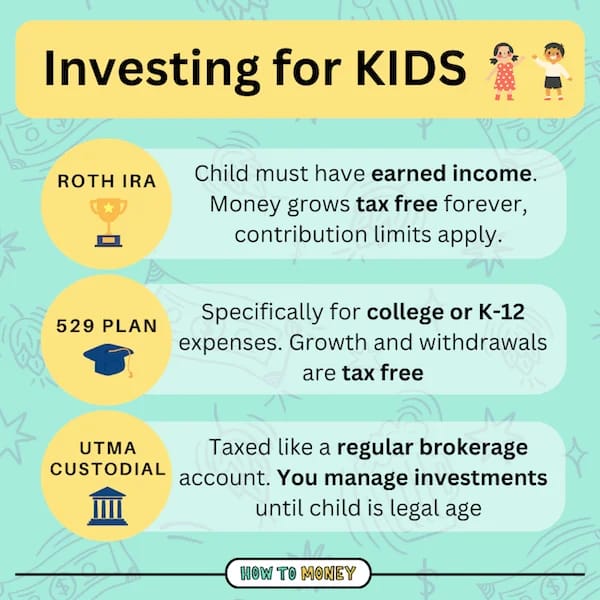
When it comes to investing for your child, we lean toward the tried-and-true methods mentioned above.
If your child qualifies for the free $1,000, congrats! We encourage you to take the free money the government is offering. The accounts officially launch on July 5th, and you can get started here. But after receiving the initial deposit and investing it, you’d likely be better served by prioritizing other ways of saving for your kids.
ICYMI!
Your Weekly Update…
Joel on (Another) Podcast! 🎙️
I recently sat down with Justin Peters on his FI Minded podcast. We explored why financial independence should create breathing room, not a new kind of burnout. If you’ve built momentum but feel stretched thin, this episode offers a healthier path forward! You can listen on Apple Podcasts or Spotify.
Your Taxes Aren’t Calling 📞
Scammers are now using AI-generated voices and deepfake tactics to pose as the IRS to pressure people into paying fake tax debts. The real IRS contacts you by mail. Don’t pick up the phone!
Yes, Another iPhone Release 📱
Apple’s new iPhone 17e keeps the core features of the iPhone 17 but costs $200 less. Featuring a smaller screen, one camera, and the same power, it seems like a solid product for anyone who needs to upgrade but doesn’t want to break the bank.
Median Age Hits 40 🏠
First-time home buyers are older than ever, with the median age in 2025 hitting 40. It’s a tougher market, but saving and having a home-buying plan can keep your homeownership goals alive.
Take some time today to enjoy that extra hour of sunshine! ☀️
Best friends out! 🍻