- How To Money
- Posts
- 50-Year Mortgages, a Lackluster Job Market, and Buying Cars Where?! 🚘
50-Year Mortgages, a Lackluster Job Market, and Buying Cars Where?! 🚘
From tapping home equity to surviving streamflation, here’s your money-smart weekly roundup.

Good morning, and happy Giving Tuesday!
After a week of gratitude, today is the perfect chance to put it into action and give back. Today is the last day to partner with us in the Voices for Good Challenge!
Whether it’s donating to a cause you care about, volunteering some of your time, or spreading awareness: let’s all do our part to make the world a better place. 🌎🤝
REAL ESTATE
A New Forever Mortgage!? 🗓️
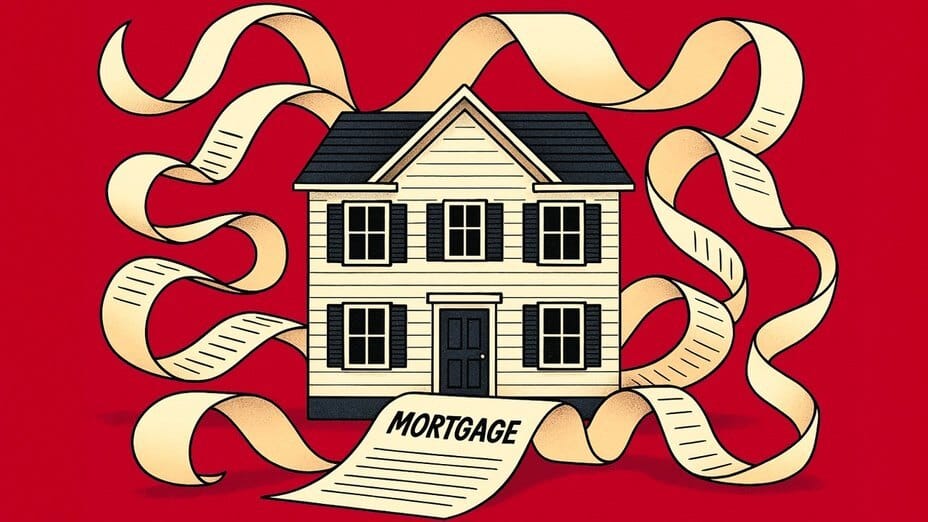
The housing market has never felt more out of reach for first-time buyers, so it’s no surprise a wild idea is making the rounds: the 50-year mortgage. Yep—half a century of payments. Are we supposed to be excited about this!?
The pitch sounds tempting: stretch the loan, shrink the monthly bill. But the tradeoffs? They’re… not small. A 50-year mortgage would only trim payments by about 5%, but you’d end up paying almost double the interest of a traditional 30-year loan.
Plus, you’d build equity at a snail’s pace. After 10 years, you’d barely own 4% of your home (compared to 16% with a 30-year mortgage).
Lenders aren’t exactly jumping to offer them, nor are investors eager to back them. Even if these loans hit the market, they may not be the affordability fix they claim to be.
So what’s the real takeaway?
A 50-year mortgage might get you a slightly smaller monthly payment, but it comes with major long-term costs—and it’s unlikely to become mainstream anytime soon.
The good news: the market is slowly shifting toward buyers. Prices are cooling, homes are sitting on the market for longer, sellers are negotiating again, and some builders are dangling rates as low as 4%.
For now, the best move isn’t waiting for a 50-year loan to save the day—it’s staying informed, watching the market, and running the numbers on what actually makes sense for your budget.

Assumes 10% down and a 6.25% interest rate for both scenarios.
CARS
The Latest Prime Deal 🚘

Car shopping might finally be joining the rest of modern life: happening online, in sweatpants, without a salesperson hovering nearby.
Ford just became the second automaker (after Hyundai) to partner with Amazon’s new car-buying platform — but with a twist. You won’t find brand-new models here. Amazon Autos will only list certified pre-owned (CPO) Ford vehicles, starting in Los Angeles, Seattle, and Dallas, with more cities to come.
So how does this actually work?
Think of Amazon as the storefront, not the seller. You can browse, finance, and buy a CPO Ford online, but the dealership still runs the show behind the scenes: they set pricing, handle servicing, and manage pickup.
Every vehicle is inspected, reconditioned, and comes with Ford-backed warranties, roadside assistance, Ford Rewards points, and sometimes even a money-back guarantee. Basically: the convenience of Amazon + the safety net of buying from a dealership.
Dealers may still have almost all of the control, but if Amazon expands nationwide, it could meaningfully shift how people buy used cars and put more pressure on traditional dealerships to up their game.
Still, this might not be the best way to score a great deal on a used car. Although it’s getting more difficult to find a solid ride from a real human down the street, the best deals can often be found when you peruse sites like AutoTrader and Facebook Marketplace. Take your time, kick the tires, and stay within budget.
TOGETHER WITH FACET*
The Black Friday Bonus That Pays You Back 💸

#FacetAd - Joel and Matt are not members of Facet. They have an incentive to endorse Facet, as they receive cash compensation for introducing you to Facet. Facet is an RIA with the SEC. All opinions are their own and not a guarantee of a similar outcome.
Holiday craziness has a way of derailing even the best budgets. With 42% of people regretting holiday spending each year, now’s the perfect time to get organized before things get out of hand.
Facet gives you expert guidance from CFP® professionals, an easy-to-use dashboard, and unlimited messaging — everything you need to take control of your finances before the year ends.
Black Friday Bonus: Get up to a $1,100 VISA gift card* for your holiday spending when you join Facet. Offer ends Dec 4!
JOB MARKET
Caps, Gowns, and No Job Offers 💼
If you’re a recent graduate (or love someone who is), you’ve probably felt it: the entry-level job market is rough right now. Like… historically rough.
What’s going on?
Here’s the quick rundown:
Youth unemployment is up. The jobless rate for 20–24-year-old college grads hit 9.3%, the highest since 2021.
Entry-level openings have tanked. Down 35% since early 2023.
Fewer seniors are securing jobs before graduation. Only 30% of 2025 grads have full-time roles lined up in their field (vs. 41% last year).
Tech hiring for new grads is still lagging, at just 50% of pre-pandemic levels.
So yeah — it’s not just you. What’s driving the squeeze?
🤖 AI is reshaping the bottom rung of the ladder. Companies aren’t just using AI, they’re reorganizing jobs around it. That means:
Some traditional entry-level tasks are now automated.
The remaining roles often require experience with AI tools… experience grads don’t always have.
Higher-level jobs have been less affected, so the “first job” category is getting squeezed the most.
⚠️ Companies are hiring more cautiously. The weird on-again-off-again economy means tighter budgets, and when budgets tighten? Entry-level roles are often the first to get cut or frozen.
🛠️ A growing skills gap. Many grads report they just don’t feel prepared for the specific, on-the-job skills employers want right now.
So what can grads do?
Recent grads can improve their odds by building skills that today’s employers actually want—starting with AI. You don’t need to be an expert, but having some fluency with AI tools is quickly becoming table stakes across almost every field.
It signals adaptability, efficiency, and a willingness to learn, which matters just as much as experience at the entry level.
It’s also worth exploring careers that are harder to automate. Jobs that rely on hands-on work, real-time problem solving, or person-to-person interaction (like healthcare support, skilled trades, teaching, and other frontline roles) are projected to grow faster than average and offer solid starting pay.
And for students still in school, pairing majors or adding a practical skill set on top of a broader field of study can help bridge the skills gap and make you more resilient in a tightening job market. 💼
REAL ESTATE
20% Down Payment — Necessary or Outdated? 🏠

Buying a home can feel overwhelming, especially when everyone talks about putting 20% down. While a bigger down payment can help you avoid private mortgage insurance (PMI) and get better loan terms, it’s far from mandatory.
In expensive markets like D.C., Hawaii, and California, saving 20% could take 30+ years, so waiting might not make sense...or even be possible.
The good news? Most lenders accept much smaller down payments, and PMI isn’t as scary as it sounds. On a $400,000 home, it could cost around $100 a month, and you can eradicate it once you reach 20% equity in your home.
Plus, there are programs designed to help first-time and lower-income buyers:
Conventional loans: Programs like Fannie Mae HomeReady and Freddie Mac Home Possible require as little as 3–5% down.
FHA loans: Start at 3.5% down (credit score 580+); 10% if your score is lower.
USDA & VA loans: Often require no down payment at all.
1%-down programs: Some lenders cover most of the upfront cost.
Local & state assistance: Grants, forgivable loans, and subsidized housing programs can help cover down payments and closing costs.
The ideal is still to save up a substantial down payment before you buy a home. It’ll put you in a more secure financial position. But if you’re ready to buy a home, can qualify for good mortgage terms, and afford the monthly payment, you don’t need to wait decades to save up 20% before considering home ownership.
A smaller down payment can get you into your first home, allow you to start building equity, and put homeownership within reach meaningfully sooner.
ICYMI
Your Weekly Update…
No Contract, No Coffee ☕
Unionized Starbucks workers are striking in 65 U.S. cities, demanding fair contracts and better pay. The “no contract, no coffee” movement isn’t just about espresso; it’s about workers’ economic security and what it really costs to brew your morning latte.
Home Sweet (Retirement) Home 🏠
Many baby boomers are facing a retirement savings shortfall, but their homes could hold the key. Tapping into home equity, whether by downsizing, relocating, or opting for a reverse mortgage, can turn housing wealth into income and help close the gap.
Streamflation Is Here 📺
Streaming was supposed to save you money, but your subscriptions are now doing the opposite. With major services hiking prices by up to 172% since 2019, even a “cheap” binge night can cost a small fortune.
We hope everyone had a great Thanksgiving! Don’t forget to spread a little extra kindness this Giving Tuesday. 🤝